
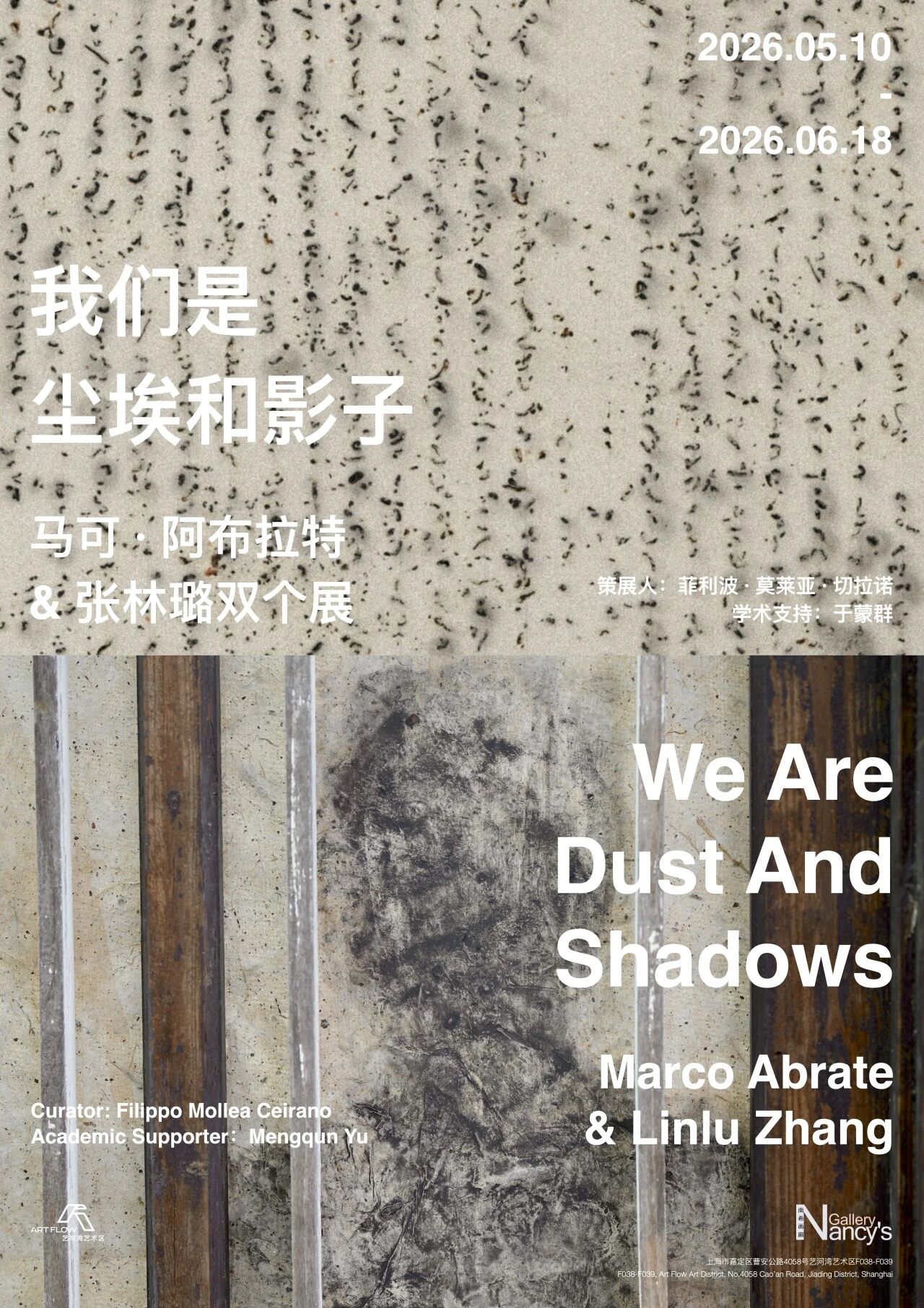
园区动态丨南希画廊「我们是尘埃和影子 We Are Dust And Shadows」 —— Marco Linlu 双个展将在艺河湾开展
2026-04-28 369我们是尘埃和影子
马可·阿布拉特&张林璐
We Are Dust And Shadows
Marco Abrate & Linlu Zhang
艺术家简介
About the Artist
马可·阿布拉特(艺术家名:Rebor)出生于1996年,是一位活跃于国际舞台的视觉艺术家。他的实践在雕塑绘画、装置和数字语言之间展开。其研究核心是幻想性视错觉(Pareidolia): 这是一种感知与想象的协作过程,他通过这一过程揭示物质内部存在的形式与形态,将墙面视为呈现隐藏图像的媒介。
通过这种视觉机制,阿布拉特深入探讨了爱、哀悼、丧失、转型,以及存在与缺席之间的张力。幻想性视错觉结合脆弱的表面与剥落的灰泥,成为了艺术家抵御数字时代图像僵化倾向的阻力工具。艺术评论家乔治·博诺米(Giorgio Bonomi)曾对其作品进行深度评析,并为其2020年在米兰举行的首场个展撰写了策展序言。
Born in 1996, Marco Abrate (artist name: Rebor) is an internationally active visual artist. His practice unfolds between sculptural painting, installation, and digital languages. The core of his research is pareidolia: a perceptual and imaginative process through which he unveils presences and forms within matter. The wall as a surface that reveals hidden images.
Through this visual device, Abrate explores in depth themes such as love, mourning, loss, transformation, and the tension between presence and absence. Pareidolia, combined with fragile surfaces and crumbling plaster, becomes for the artist a tool of resistance against the rigidity of the image in the digital age. His work has been examined by art critic Giorgio Bonomi, who wrote the curatorial text for his first solo exhibition in Milan in 2020.
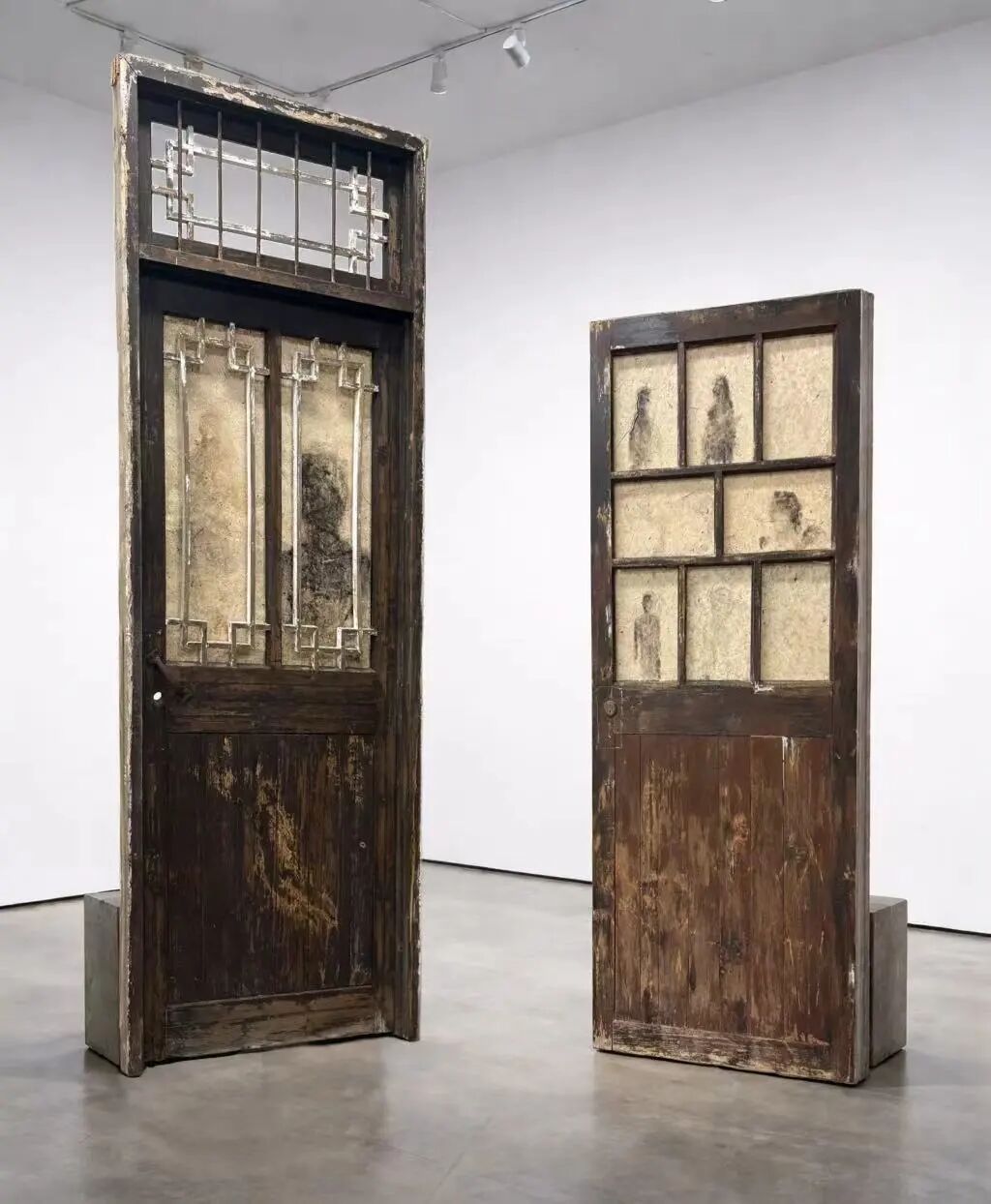
Thresholds 门槛, 246x88x5cm, 80x195x5cm, 2026
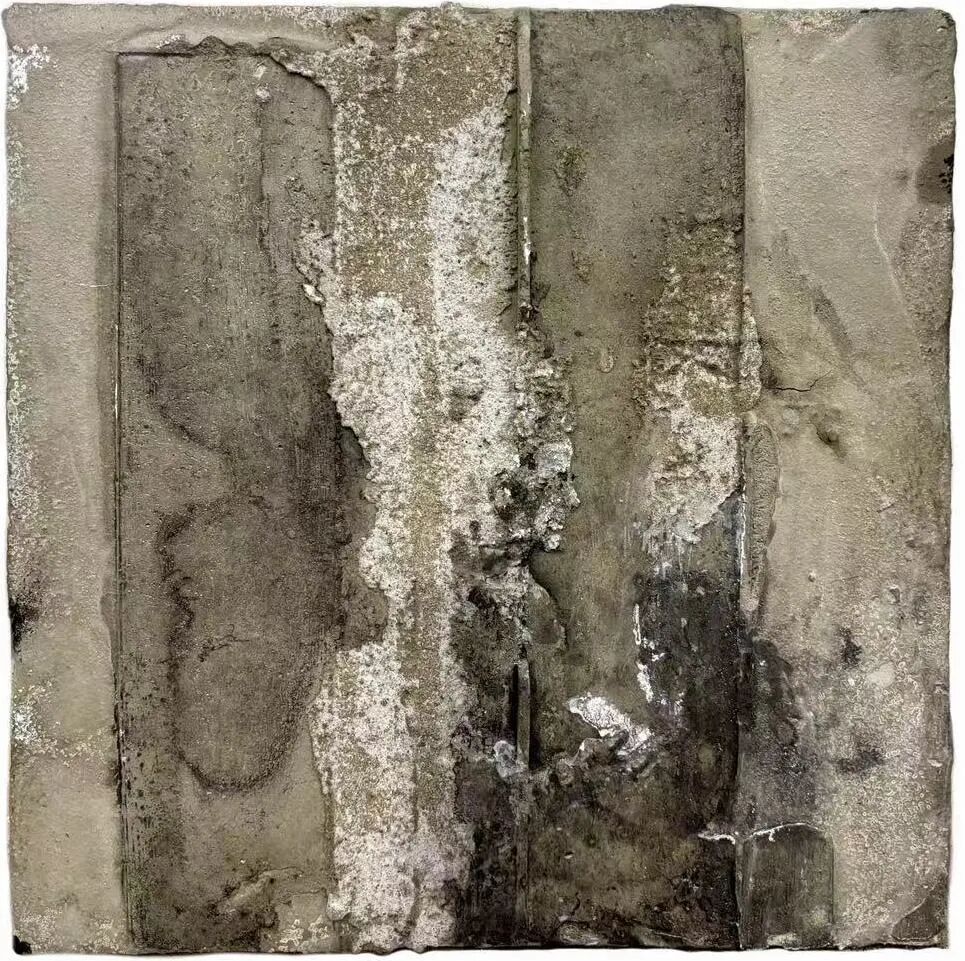
Between Two Voices 两种声音之间, 44.5 × 46 cm,2026
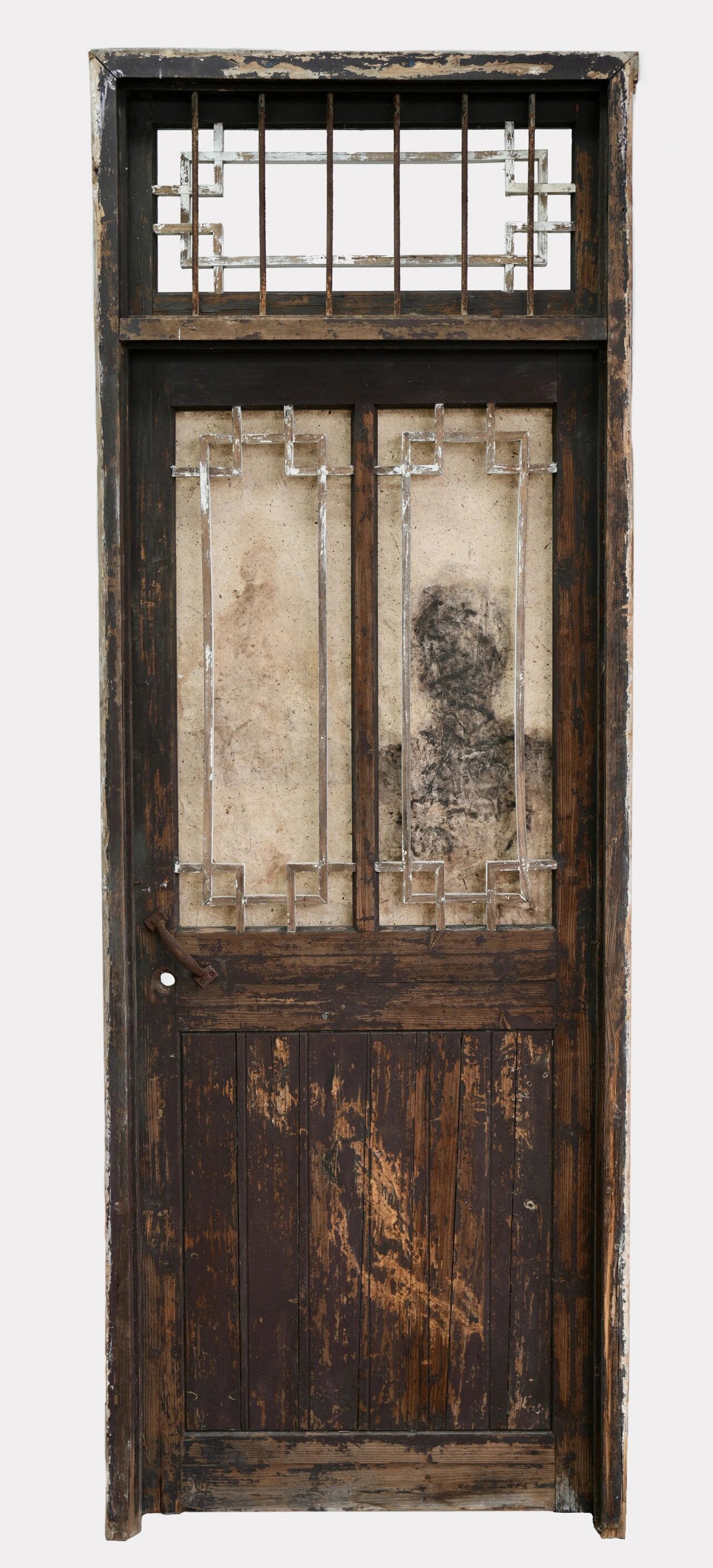
(Detail)Thresholds 门槛, 246x88x5cm, 2026
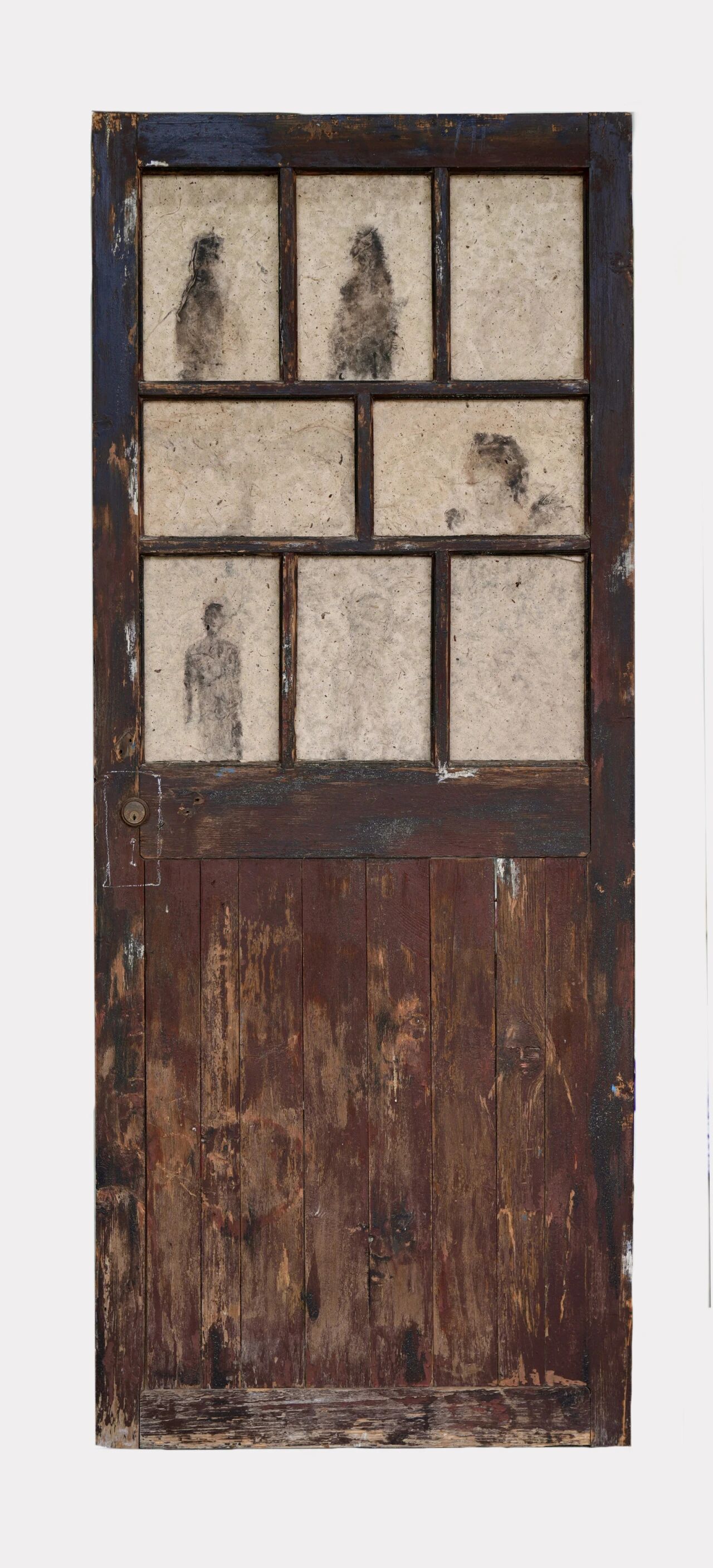
(Detail)Thresholds 门槛, 195x80x5cm, 2026
张林璐(b.1996)是一位活跃于伦敦与上海之间的当代艺术家,毕业于英国皇家艺术学院。她的创作横跨版画、装置与跨媒介实践,长期研究无语义书写(asemic writing),将书写时的行为、材料的变化与时间的痕迹作为承载记忆与潜在交流的媒介。
她的艺术方法以无语义书写为核心,让感知与情绪成为作品的重点。在她的作品中,记忆不被直接再现,而是以物质形式被保存和转化,使观者思考意义如何生成。通过去除可读的文字信息,作品不再依赖“理解内容”,而是通过文化、视觉与身体经验直接影响观者。无语义书写不再只是文本,而成为一种“物”,其重点不在于是否可读,而在于让观者感受人与语言之间的关系,并参与意义的生成过程。
Linlu Zhang (b. 1996) is a contemporary artist active between London and Shanghai, who graduated from the Royal College of Art in the UK. Her practice spans printmaking, installation, and cross-media approaches. Through a long-term research focus on asemic writing, she utilizes the physical act of writing, the transformation of materials, and the traces of time as mediums to carry memory and potential communication.
Her artistic methodology is centered on asemic writing, bringing perception and emotion to the forefront of her work. In her creations, memories are not directly represented but rather transformed into material forms, prompting the viewer to reflect on how meaning is generated. By stripping away legible textual information, her works no longer rely on the "comprehension of content"; instead, they directly impact the audience through cultural, visual, and somatic experiences. Its primary focus is no longer legibility, but rather inviting viewers to experience the relationship between humanity and language, actively participating in the process of generating meaning.
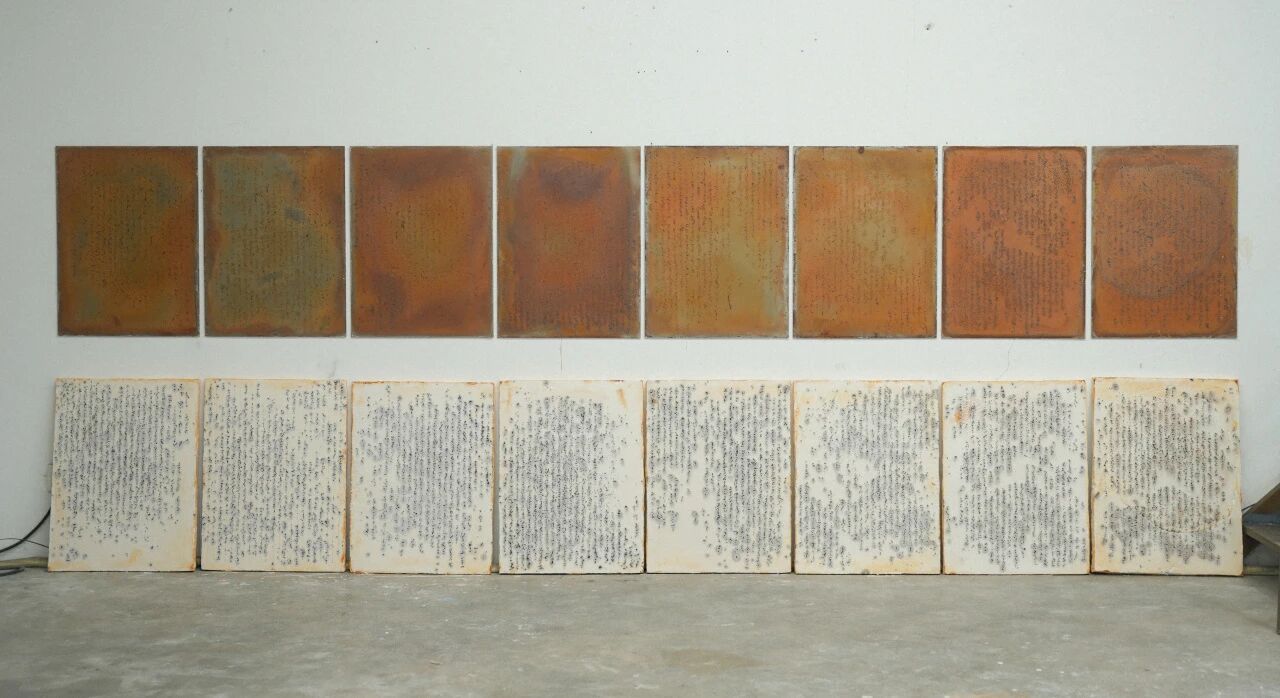
The view from the studio 工作室现场
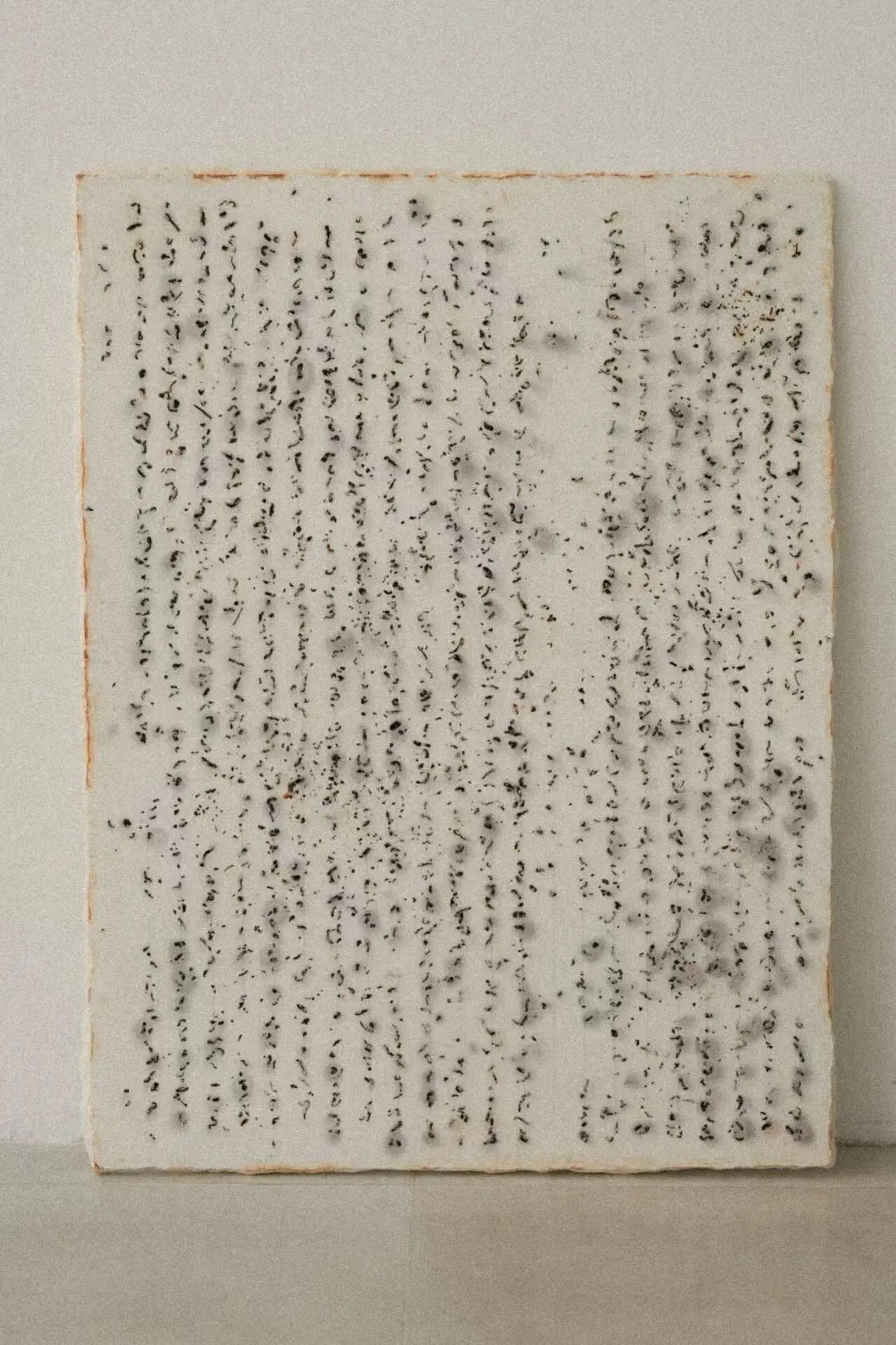
Levante 清晨之地, 80x60cm, 2026
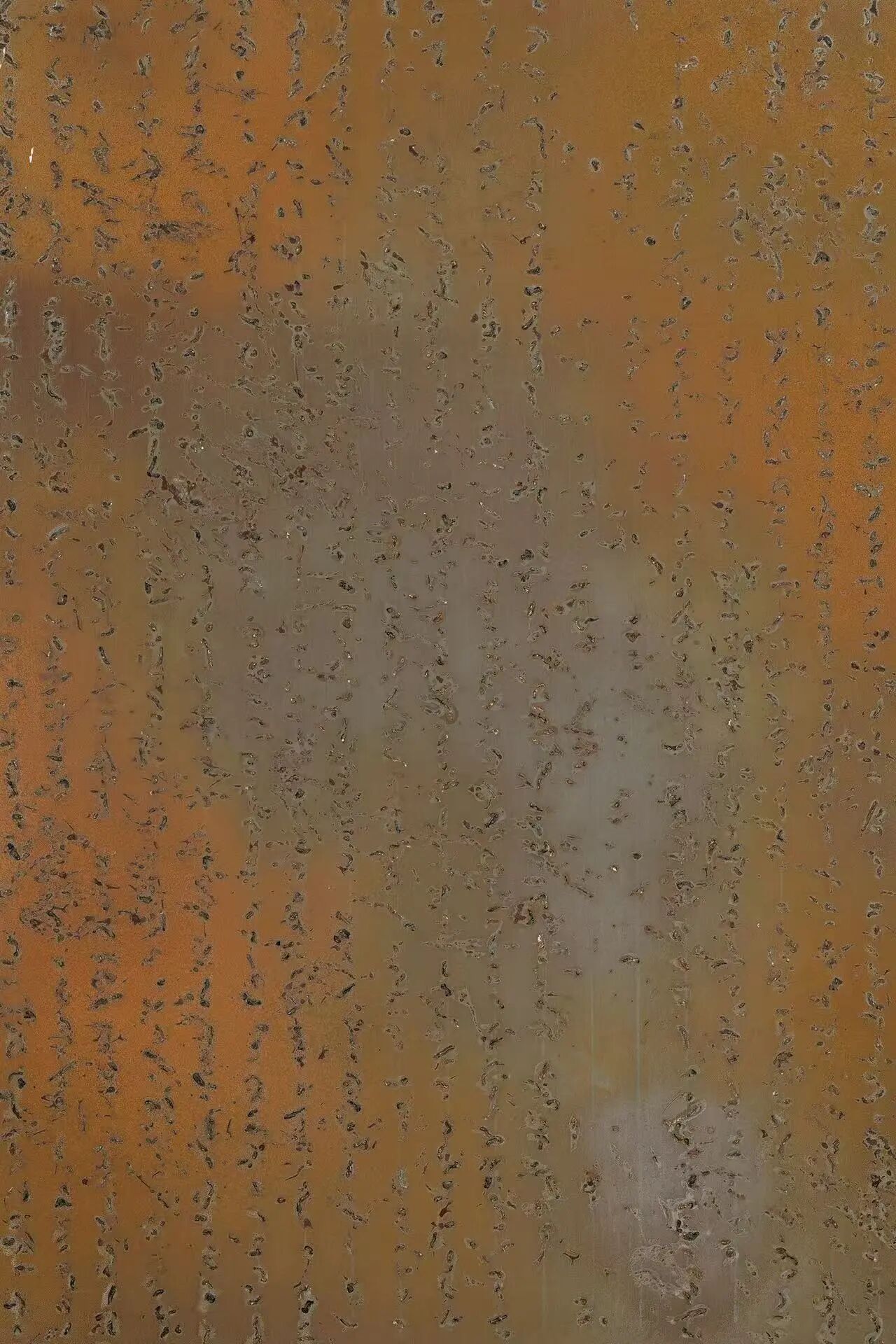
Ponente 傍晚之地, 80x60cm, 2026
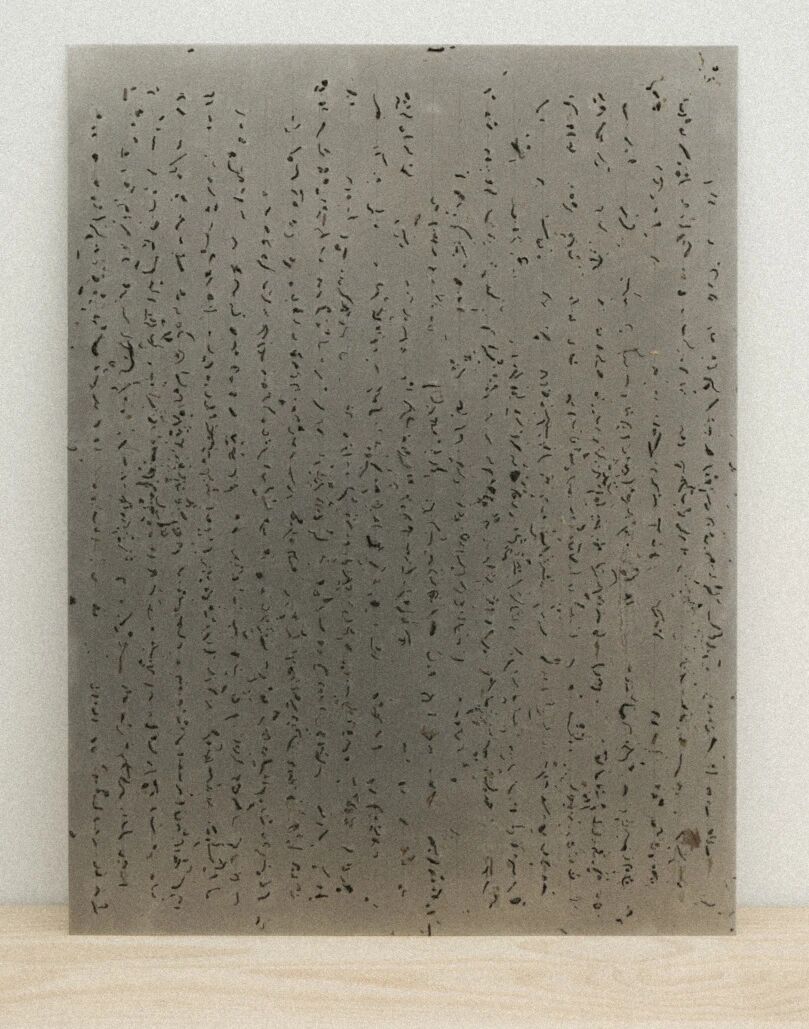
Work in progress 创作过程
我们是尘埃和影子
-- 菲利波·莫莱亚·切拉诺
这场双人展致力于呈现张林璐与Marco Abrate的研究与创作。两位艺术家年龄相仿,但在出身、教育背景、作品类型、技术与材料运用上却有显著差异。然而,他们的作品在一个重要层面上汇合:即他们如何面对当代社会与文化中那些最微妙、最具争议与矛盾的主题——这些问题在当代艺术的意义与发展机制中占据核心位置。两人都将注意力集中在感知、处理、想象与创造力的生成过程上。这一在艺术领域中始终重要且复杂的问题,如今也必须面对科技,尤其是传播技术与虚拟世界所带来的新变化。
在解读与呈现这样一场双人展时,从两种艺术语言之间的对比中,可以获得极具启发性的思考——既包括它们的共通之处,也包括差异。其中一个尤为重要的方面在于两位艺术家的文化背景:张林璐出生并成长于中国,随后在西方完成学业;而Marco Abrate则根植于纯粹的意大利文化与教育体系,同时长期对东方文化与历史抱有浓厚兴趣。
两位艺术家都从自身历史出发。Abrate延续的是欧洲发展出的具象语言,这一传统在中世纪晚期至文艺复兴时期达到高峰与转折,因此他的创作仍然与“图像—形式”紧密相连,与现实世界的再现保持直接联系。相比之下,张林璐则从其文化中的书写传统出发,追溯到其共同源头——后来发展为现代汉字的系统。这一系统源自象形文字,即通过简化的视觉符号来表达语言的声音与意义。
然而,在接下来的层面上,两位艺术家的路径开始交汇,形成共同的基础:即他们如何与观者建立关系。他们都不满足于单向交流——即艺术家提供作品,而观者仅承担接受与理解的角色。他们的目标在于激发一种动态过程,使观者直接参与其中,在面对作品时既产生情感反应,也进行某种意义上的创造性行动。这里需要强调,这并非鼓励完全脱离艺术家的“自由解读”,而是寻求一种相遇、一种共同参与,从而形成真正的对话关系。Abrate对此曾有一个精炼的表述:他的创作并不是制造一个供观看的图像或消费对象,而是创造“让作品发生的条件”。这一点同样适用于张林璐的实践,尽管她的语言与形式截然不同。
两位艺术家的共同目标,是摆脱当代艺术中日益普遍的某些机制——这些机制往往受市场逻辑支配,将艺术简化为可批量生产、短暂消费的商品。他们依然创造“物件”,但这些并非仅供观看与欣赏的对象,而是旨在激发行动、引发反应,从而开启一个自主的过程,使观者成为主动参与者,进行自身的思考与创造。在这一过程中,观者被引导去体验想象力运作的机制——而这种能力在当代艺术中往往被视为专业人士的专属领域。
两位艺术家通过看似不同的方式达成这一共同目标。张林璐的创作基于“无语义的书写”(asemic writing),即一种视觉上类似文字的图像,但其中的符号并不承载任何固定的语义,也不对应既定的声音或音素。她的作品使用多种材料与媒介,从纸上的墨迹到金属板,甚至茶叶;这些材料有时会发生变化与降解,生成新的形态并覆盖原有的符号。在这些作品中,语言不再是编码系统,而是摆脱社会约定与规范的束缚,从信息传递的工具回归为自由的交流形式。一方面,这种实践可被视为回到书写的“零度状态”,回到人类最初创造符号与图像、尚未赋予其约定意义的时刻;另一方面,正如艺术家所言:“在一个由理性建构的世界中,人类的创造力被工具化,并在这一过程中走向虚无。本项目的意义在于为我们提供一种新的视角,以理解存在与世界之间的关系,从而引发对存在、记忆与自我意识的更深层反思。”观者在观看这些作品时,仿佛逆向追溯语言诞生与沟通发明的历程。
Abrate的创作则更直接地依赖图像,并基于“错视识别”(pareidolia)这一心理机制——即人脑倾向于在随机形态中识别出熟悉图像的能力。他的实践源于其街头艺术经验,常在不可预测的城市环境中进行创作。他将墙体的一部分或城市遗留材料转化为作品载体,通过裂缝、破损与风化的表面暗示形象,让观者去识别与重构。从中可以提炼出两个核心要素。首先是时间——墙面上的裂痕与沉积记录了时间的流逝与腐蚀,成为走向毁灭的中间状态。
艺术家在这一不可逆的时间进程中引入第二个概念:视觉感知。通过前述的错视识别,形象从材料中浮现,被观者识别。正如Giorgio Bonomi在《揭示》(为展览“Hidden Images”撰写)中所言:“问题在于,灰泥究竟是遮蔽还是揭示图像?事实上,我们面对的是一种典型的辩证过程,其中两种可能性彼此等价且密不可分,如同其他对立关系(正与负、黑与白、美与丑等)。最终由观者的感知能力与敏感度来决定其性质。”
无需逐一分析具体作品(因为它们通过观看所传达的远多于文字描述),我们在结尾希望强调,这场展览为当代社会中某些正在迅速扩散却往往未被察觉的机制提出了重要警示。两位艺术家所激发的心理过程,实际上构成了对当今由计算机与人工智能主导的认知模式的反转——在这些模式中,人类往往将自身的感知与认知能力直接让渡给机器。
We Are Dust And Shadows
-- Filippo Mollea Ceirano
The double solo exhibition is dedicated to the research of Linlu Zhang and Marco Abrate, artists who are of the same age but very different in terms of origins, training, types of works, techniques, and materials used. However, through their works they find a point of convergence in the way they approach highly delicate aspects of some of the most controversial and contradictory themes of the contemporary era, of society, and of culture: these are, in particular, aspects that play a central role in the meaning and dynamics of the most recent art. Both focus their attention on how processes related to perception, elaboration, imagination, and creativity develop. This issue, which has always been central and problematic in the field of art, must in recent times confront the novelties introduced by the latest technological developments, and specifically by communication technology and the virtual world.
In reading, and therefore also in presenting a two-person exhibition, it is possible to find very stimulating reflections starting from the analysis of what emerges in general from the comparison between the two poetics, and in particular from their common aspects on the one hand and their differences on the other. In this case, a first certainly relevant aspect is linked to the origin of the two artists: while Linlu Zhang was born and raised in China and later completed her education in the West, Marco Abrate is of purely Italian origin and training, although he too has long cultivated a strong interest in Eastern culture and history.
Each of the two moves by rooting their work in their own history. Abrate refers to the figurative language developed in Europe, which found its peak and turning point in the transition from the late Middle Ages to the Renaissance, and thus remains tied to the image-form, to the direct reference to a vision that refers back to reality, to its reproduction. Zhang, on the other hand, starts from the historical foundations of the writing of her land of origin, from the common ancestor later developed into its modern form expressed through ideograms; these are the evolution of pictograms, characters through which the sound and meaning of words were expressed by reproducing images synthesized through a few essential signs.
It is in the subsequent step that the paths of the two artists meet, finding common ground, namely in the way both choose to relate to the recipients of the communication contained in their works. They are not interested in a unidirectional relationship, in which the artists makes their work available to a viewer whose task (but also limitation) is to receive it, understand it, and absorb it. The objective is another: to trigger a dynamic that leads the viewer themselves to become directly involved, to react to the work both with an emotional effort and by carrying out, in a certain sense, a creative step. Here, however, an important clarification must be made: it is not about relying on a personal reaction in which the artist is bypassed by a “free vision” that detaches itself to give rise to a vaguely defined subjective interpretation, but rather about the search for an encounter, for a shared participation that triggers a real dialectic between the parties. Abrate himself summarized the concept with an effective formulation, essentially stating that his intervention does not consist in creating an icon to be looked at, an object of consumption, but in creating the conditions “to make the work happen.” The same can be said for Zhang’s research, albeit with different languages and forms.
For both, the objective is to escape dynamics that too often permeate the world of contemporary art, now settled into a quantitative logic regulated by the market and reduced to a serial production of gadgets destined for more or less extemporaneous consumption. They still produce objects. But these are not artifacts to be merely observed and admired from the outside. They have the precise purpose of triggering an activity, of provoking reactions from which an autonomous process begins, leading the observer to act in the first person, to undertake their own path of elaboration, and to enter as an actor with their own creative moment. In this way, they are placed, almost unconsciously, before the dynamics that develop through the use of imagination—dynamics that in contemporary art tend to be considered the monopoly of professional specialists.
The two artists achieve this common objective through two apparently distant approaches. Linlu Zhang works on “asemic writing,” that is, the production of images whose texture recalls the idea of writing, but in which the signs are not linked to any semantic content, nor do they represent predetermined sounds or phonemes. The works are created on surfaces of various kinds and with different materials, from ink on paper to metal plates, up to tea leaves; sometimes these materials themselves alter and degrade, creating new forms that overlap with the signs. In them, language ceases to be a code, detaches itself from the rules established by convention that force it to reproduce social order, and returns to being a free communication rather than a vector of information flows. On the one hand, one can find a return to a sort of “zero degree” of writing, to the moment when artificial signs and images began to be produced before being assigned a conventional meaning. On the other hand, as the artist herself writes, “In a world constructed by reason, the creativity of human life is instrumentalized and, in this instrumentalization, also nihilized. The usefulness of this project lies in offering us a new perspective to understand the relationship between our existence and the world. It will lead to a deeper reflection on existence, memory, and self-awareness.” Observing them, one retraces the path that led to the birth of language, to the invention of communication.
Abrate’s work, on the other hand, is more directly linked to the iconic image and is essentially based on “pareidolia,” that is, the perceptual process that instinctively leads the human brain to elaborate images by tracing random forms back to known objects already encountered through experience. His research originates from his past experience as a street artist, which often led him to intervene on walls or urban contexts of varied and unpredictable nature. He thus creates his works on portions of walls, reconstructed and reduced to panels, or other remnants taken from the urban context, on whose surfaces, by playing with breaks, imperfections, and degradations, he hints at forms and subjects that he leaves to the observer to grasp and reconstruct. From these works two elements emerge. The first is that of time, which leaves cracks and encrustations on the wall as signs of its passing and its decay, as an intermediate phase that preludes destruction.
The operation that the artist inserts into this inexorable flow of time makes use of a second concept, in this case visual—perception—and refers back to the already mentioned pareidolia, through which figures and images emerge from the support, making themselves recognizable to the observer. In this regard, Giorgio Bonomi writes in the text Disvelamenti, drafted for the presentation of the exhibition Hidden Images: “The question is whether the plaster conceals or reveals the image. Indeed, we are faced with a typical dialectical process in which the two horns of the dilemma are equivalent and intimately connected, as happens with other polarities (negative and positive, black and white, beautiful and ugly, etc.): it is up to the sensitivity and perceptual attitude of the observer to determine whether it is one action or the other.”
Without entering into the specifics of the individual works, which have much more to say through their observation than through an external description, it seems important to underline, in conclusion, how in this exhibition one can grasp an important warning regarding certain mechanisms that, almost unconsciously, are spreading exponentially in contemporary society. The mental processes triggered by both artists in fact bring about a reversal of the dynamics that have now become dominant through the use of information technology and Artificial Intelligence, in which the human being renounces from the outset their own perceptual and cognitive elaboration in order to delegate it entirely to the function of the machine.
我们是尘埃和影子
We Are Dust And Shadows
策展人|Curator
Filippo Mollea Ceirano
菲利波·莫莱亚·切拉诺
出品人|Producer
Nancy Lee
学术主持|Academic Supporter
于蒙群
艺术家 | Artists
Marco Abrate & Linlu Zhang
马可·阿布拉特&张林璐
展期 | Duration
2026.05.10 - 2026.06.18
地址 | Venue
上海市嘉定区安亭镇曹安公路4058号F038-F039
南希画廊Nancy’s Gallery, F038-F039,
No. 4058 Cao'an Road, Anting Town,
Jiading District, Shanghai
开放时间 | Time
周二至周日:10:00 - 18:30
Tuesday to Sunday: 10:00 -18:30
策展助理 | Assistants
李泽楷 杨芊里 周悦童 张榜 崔竞文